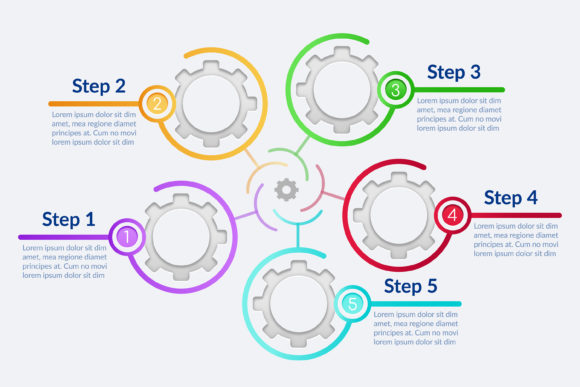
Evaluating Merchandise Production Vector Templates for Retail Workflows
Selecting the right visual assets for retail trade presentations requires balancing aesthetic appeal with functional clarity. A Merchandise Production Vector Template serves as a foundational design resource for professionals who need to illustrate manufacturing processes, supply chain logistics, or product development cycles. These templates are not merely decorative; they are structured communication tools designed to convey complex operational data efficiently. When evaluating these resources, decision-makers must look beyond surface-level graphics and assess how well the template architecture supports specific business narratives, data visualization needs, and technical workflows.
Defining the Asset Class and Core Utility
A Merchandise Production Vector Template is a scalable graphic framework specifically engineered to depict the stages of creating retail goods. Unlike generic business icons, these templates integrate industry-specific terminology and visual metaphors relevant to manufacturing, quality control, and distribution. The primary utility lies in their ability to standardize visual communication across departments. Marketing teams use them for investor decks, operations managers utilize them for training manuals, and supply chain analysts employ them for stakeholder reporting.
The inclusion of dedicated text space is a critical differentiator in high-quality templates. Effective designs provide balanced negative space that accommodates variable content lengths without breaking the visual hierarchy. This ensures that whether a user is adding brief bullet points or detailed process descriptions, the layout remains legible and professional. Furthermore, the vector nature of these files guarantees that diagrams remain crisp at any scale, from mobile screens to large-format trade show banners, preserving the integrity of fine lines and typography essential for technical diagrams.
Assessing Data Visualization and Process Structures
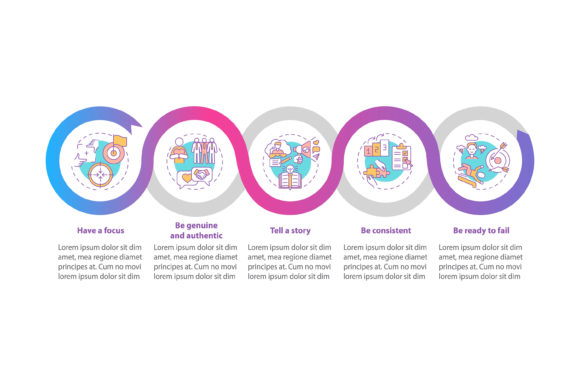
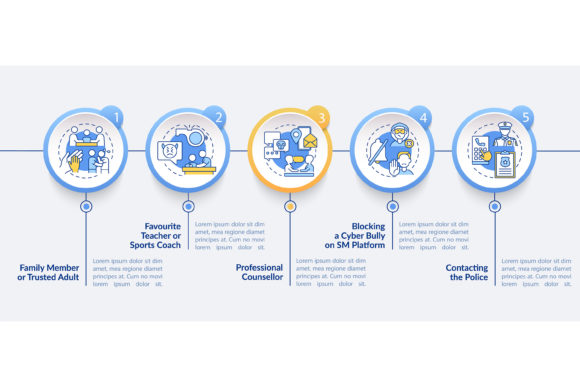
When comparing templates, the structural approach to data visualization should be a primary evaluation criterion. Many merchandise production templates feature a standardized 5-step process model. This format is particularly effective for retail contexts where production often follows a linear progression: sourcing, prototyping, manufacturing, quality assurance, and distribution. Evaluators should determine if this five-stage rigidity aligns with their actual workflow. If a production cycle involves iterative feedback loops or parallel processing, a strictly linear 5-step template may oversimplify the reality, potentially misleading stakeholders.
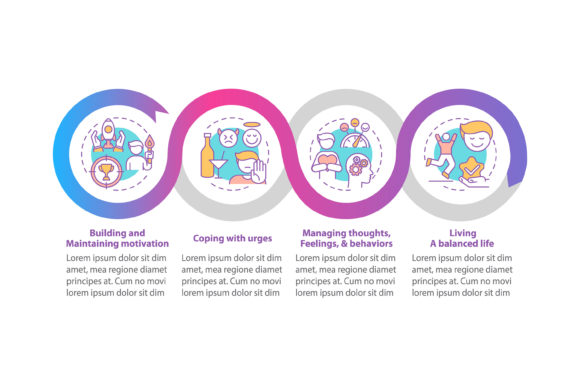
Process timeline charts offer an alternative visualization method within these template packages. Timelines are superior when temporal accuracy matters more than sequential categorization. For example, if the goal is to highlight lead times between fabric sourcing and final assembly, a timeline chart provides necessary context that a simple step-by-step flow lacks. Workflow layouts with ample copyspace bridge the gap between these two approaches, allowing users to overlay custom milestones onto a flexible grid. The decision between a fixed 5-step diagram and a flexible timeline should be driven by the specific story the data needs to tell rather than defaulting to the most visually prominent option.
Technical Specifications and Format Compatibility
The practical value of a Merchandise production vector infographic template is heavily dependent on file format availability and software compatibility. Professional asset packs typically include AI, EPS, SVG, PNG, and JPG formats, each serving distinct purposes in the production pipeline.
- AI and EPS: These source files are mandatory for users requiring deep customization. They allow designers to modify anchor points, recolor individual elements, and restructure the layout entirely. Without these formats, a template is essentially a static image with limited utility.
- SVG: Scalable Vector Graphics are essential for digital-first presentations and web integration. They maintain infinite resolution while keeping file sizes low, making them ideal for interactive dashboards or responsive retail portals.
- PNG: High-resolution PNGs with transparent backgrounds serve as quick-insert assets for non-designers working in PowerPoint or Word. They offer immediate usability but sacrifice editability.
- JPG: While less versatile for production diagrams due to compression artifacts and lack of transparency, JPGs remain useful for draft mockups or low-bandwidth email communications.
Evaluators must verify that the vector files are properly constructed. Poorly optimized vectors can contain thousands of unnecessary anchor points, causing performance issues in presentation software. Additionally, checking for global color swatches and organized layer structures in AI/EPS files can save significant editing time during implementation.
Strategic Fit: When Templates Add Value
Merchandise Production Vector Templates represent a strong strategic fit for organizations prioritizing speed and consistency over bespoke artistry. In fast-paced retail environments where product seasons turn over rapidly, the time cost of commissioning custom illustrations for every new collection is prohibitive. Templates provide a middle ground, offering professional-grade visuals that can be adapted in hours rather than weeks. They are particularly valuable for cross-functional teams where multiple stakeholders need to create materials that look cohesive despite being produced by different individuals.
These assets also excel in educational and onboarding contexts. New employees in retail operations benefit from standardized visual representations of company processes. Using a consistent template library reinforces organizational vocabulary and reduces cognitive load during training. Similarly, B2B retailers communicating with external vendors find that standardized production diagrams reduce ambiguity regarding specifications and expectations, minimizing costly errors in the supply chain.
Tradeoffs and Alternative Considerations
Despite their advantages, reliance on templates carries inherent tradeoffs that must be weighed against project goals. The most significant risk is visual homogeneity. If competitors utilize similar stock assets, brand differentiation suffers. Templates work best as starting points rather than final products; organizations with strong brand identities should expect to invest design resources in modifying colors, typography, and iconography to match corporate guidelines. A template used "out of the box" rarely aligns perfectly with established brand systems.
Furthermore, templates may not accommodate highly specialized or proprietary manufacturing processes. If a retailer employs unique technology or non-standard workflows, forcing those processes into a generic 5-step framework can result in inaccurate documentation. In such cases, hiring a specialized information designer or illustrator may yield better long-term ROI despite higher upfront costs. Custom illustration ensures that the visual representation matches the operational reality exactly, avoiding the confusion that arises when employees must mentally translate between a generic diagram and their actual daily tasks.
Data density presents another consideration. Vector templates designed for general audiences often prioritize white space over information density. Technical teams requiring granular detail may find these layouts frustratingly sparse. Conversely, executive summaries may find detailed engineering diagrams overwhelming. Evaluators should audit sample pages against their typical content volume before purchasing. If the ratio of text space to graphical elements does not match typical use cases, even a beautifully designed template will require extensive restructuring.
Making the Final Selection Decision
Ultimately, selecting a Merchandise Production Vector Template should be treated as a procurement decision rather than a purely creative one. Start by auditing current pain points: Are presentations inconsistent? Is design turnaround time delaying product launches? Do stakeholders misunderstand production timelines? If efficiency and standardization are the primary objectives, a comprehensive template package with full vector source files is likely justified.
Create a shortlist based on technical requirements first—eliminating any options lacking AI/EPS/SVG support regardless of visual appeal. Then, evaluate structural flexibility. Test whether the 5-step and timeline components can be adapted to your specific merchandise categories without losing coherence. Finally, consider the total cost of ownership, including the internal labor required to customize the assets. A slightly more expensive template with superior organization and editable components often proves more economical than a cheaper alternative requiring dozens of hours of redesign work. By approaching the selection process through this analytical lens, retail professionals can secure visual assets that genuinely enhance operational communication rather than simply filling space in a slide deck.