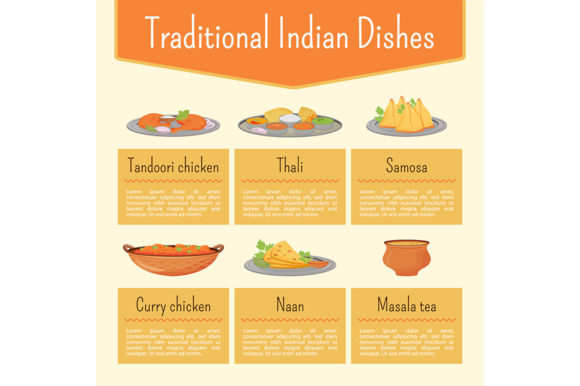
Evaluating Indian Dishes Flat Color Vector Assets for Culinary Design Projects
Selecting the right visual assets for food-related marketing requires balancing cultural authenticity with modern design functionality. When professionals search for an Indian dishes flat color vector, they are typically looking for a specific aesthetic that bridges traditional culinary heritage with contemporary graphic design trends. These assets serve as foundational elements for meal recipes posters, booklets, PPT page concept designs featuring cartoon characters, menu advertising flyers, leaflets, and info banners. Understanding the technical specifications and practical applications of these resources is essential for designers, marketers, and restaurant owners who need to produce high-quality collateral efficiently.
Defining the Flat Color Aesthetic in Indian Cuisine Illustration
The term "flat color" refers to a design style that avoids gradients, shadows, and three-dimensional rendering in favor of solid blocks of color. In the context of Indian cuisine, this approach presents unique advantages and challenges. Indian food is inherently textured and vibrant, characterized by complex spice blends, rich gravies, and varied garnishes. Translating this complexity into a flat vector format requires a deliberate simplification process.
A high-quality Indian dishes flat color vector distinguishes itself through shape language and color accuracy rather than photorealistic detail. The best assets in this category utilize distinct silhouettes to differentiate between similar dishes, such as butter chicken versus tikka masala, or various types of bread like naan, roti, and paratha. The color palette must be culturally accurate; using neon oranges or incorrect shades of green can inadvertently signal inauthenticity to an audience familiar with the cuisine. Therefore, when evaluating these vectors, one must assess whether the artist has prioritized recognizable culinary markers over generic stylization.
Comparing Vector Formats Against Raster Alternatives
One of the primary decision factors for design professionals is choosing between vector-based illustrations and raster (pixel-based) photography or illustration. While high-resolution food photography remains the gold standard for appetizing menu imagery, flat color vectors offer distinct functional benefits that photographs cannot match.
- Scalability: Vectors are mathematically defined, meaning an Indian dishes flat color vector can be resized from a small icon on a business card to a massive billboard without any loss of quality. Raster images pixelate when enlarged beyond their native resolution.
- Editability: Because these assets are typically delivered in editable formats, designers can alter colors to match specific brand guidelines. If a restaurant’s branding uses a specific shade of saffron, the vector elements can be adjusted instantly, whereas recoloring a photograph often results in unnatural tones.
- File Size and Performance: For digital applications like web banners or mobile menus, vector files (especially SVG) are significantly lighter than high-res photos, contributing to faster load times and better SEO performance.
- Cohesion: Creating a consistent visual style across twenty different dish photos is difficult due to varying lighting conditions and plating styles. A unified vector pack ensures every element shares the same line weight, color saturation, and perspective.
However, vectors have tradeoffs. They lack the visceral, sensory appeal of photography. A flat illustration communicates information and style but does not necessarily trigger appetite in the same way a glossy photo does. Consequently, many successful campaigns use a hybrid approach: vectors for informational sections, infographics, and decorative borders, and photography for hero images and featured specials.
Technical Specifications and File Format Utility
When acquiring a comprehensive design resource, the inclusion of multiple file formats is critical for workflow flexibility. A robust ZIP file containing EPS, JPG, PNG, SVG, and AI formats addresses the needs of diverse software environments and end-use cases.
Source Files: AI and EPS
Adobe Illustrator (AI) and Encapsulated PostScript (EPS) files are the industry standards for vector editing. These are the master files required for modifying the artwork. Professionals evaluating these assets should verify that the layers are organized logically and that paths are closed and clean. Poorly constructed vectors with excessive anchor points or open paths can be frustrating to edit and may cause printing errors. The AI format preserves native Illustrator features, while EPS offers broader compatibility with other vector software like CorelDRAW or Affinity Designer.
Raster Exports: JPG and PNG
Not all stakeholders have access to vector software. Including high-resolution JPG and PNG files ensures that clients, social media managers, or office staff can use the assets immediately for presentations or basic documents. PNGs are particularly valuable for this niche because they support transparency. An Indian dishes flat color vector on a transparent background allows for seamless integration into colored flyers or layered web designs without unsightly white boxes. JPGs serve well for rectangular content blocks where transparency is unnecessary.
Web Optimization: SVG
Scalable Vector Graphics (SVG) are essential for modern web design. Unlike EPS, SVG is XML-based and renders natively in browsers. For menu advertising flyers that have digital counterparts, or for interactive recipe booklets, SVG ensures crisp rendering on retina displays and mobile devices. When comparing asset packs, prioritize those that include optimized SVGs rather than auto-traced conversions, as the latter often contain redundant code that bloats webpage size.
Application-Specific Considerations
The suitability of an Indian dishes flat color vector depends heavily on the intended medium. Different formats impose different constraints on complexity and composition.
Meal Recipes Posters and Booklets: Educational materials benefit most from the diagrammatic nature of flat vectors. These assets can illustrate ingredient breakdowns, cooking steps, or spice identification charts more clearly than photos. In this context, clarity trumps artistic flair. Look for vectors that leave negative space for text overlays, as recipe posters require significant typography.
PPT Page Concept Designs with Cartoon Characters: Corporate presentations or culinary training modules often require a friendlier, less formal tone. Integrating cartoon characters with food vectors adds narrative potential. However, there is a fine line between engaging and caricature. When selecting assets with human elements, ensure the character design respects the culture and avoids stereotypes. The characters should feel like part of a cohesive design system rather than clip-art afterthoughts.
Menu Advertising Flyers and Leaflets: Print marketing demands high contrast and immediate readability. Flat color vectors excel here because they reproduce consistently across different printing methods, from digital flyers to offset-printed menus. Unlike photos, which can look muddy if printed on uncoated paper, solid vector colors remain vibrant. For leaflets, consider how the vectors interact with fold lines; central illustrations should not be obscured by creases.
Info Banners: Digital banners have strict aspect ratios and limited attention spans. Vectors used here must be legible at small sizes. Intricate details that look beautiful in a full-size artboard may disappear in a 300x250 display ad. Simpler, bolder interpretations of Indian dishes perform better in banner advertising.
Evaluating Quality and Cultural Accuracy
Beyond technical specs, the intangible quality of cultural representation is a major differentiator. The market is saturated with generic "curry" icons that bear little resemblance to actual regional Indian cuisine. Professionals must scrutinize assets for specificity.
Does the biryani illustration show the correct layering and garnish? Is the dosa depicted with the appropriate texture and accompaniment? Are the utensils shown (such as thalis, katoris, or tandoors) accurate to the region being represented? Generic assets may suffice for a broad "world food" festival, but they undermine credibility for specialized Indian restaurants or authentic cookbooks. Investing time in finding culturally precise vectors pays dividends in audience trust and brand perception.
Furthermore, evaluate the artistic consistency within the pack. A common issue with bundled assets is that they are aggregated from different artists or created over long periods, resulting in mismatched stroke weights, inconsistent lighting angles, or clashing color palettes. A professional-grade resource should feel like it was created as a single, unified collection. Test this by placing three or four different dish illustrations side-by-side; they should look like they belong to the same family.
Making the Final Selection Decision
Choosing the right Indian dishes flat color vector resource ultimately comes down to aligning project requirements with asset capabilities. If the goal is to evoke hunger and showcase premium ingredients, high-end photography or realistic digital painting may be superior. If the objective is to create scalable, editable, and informative design systems for menus, educational content, or branded merchandise, flat vectors are the pragmatic choice.
When comparing options, weigh the depth of the library against the quality of individual assets. A smaller pack with meticulously crafted, culturally accurate, and technically clean vectors is often more valuable than a massive bundle of generic, poorly constructed files. Verify licensing terms carefully, especially for commercial menu use or large-scale advertising. Ensure the included file formats match your team's software capabilities and that the artistic style aligns with your brand voice. By approaching the selection process with these criteria in mind, designers can secure assets that enhance both the efficiency of their workflow and the authenticity of their final output.