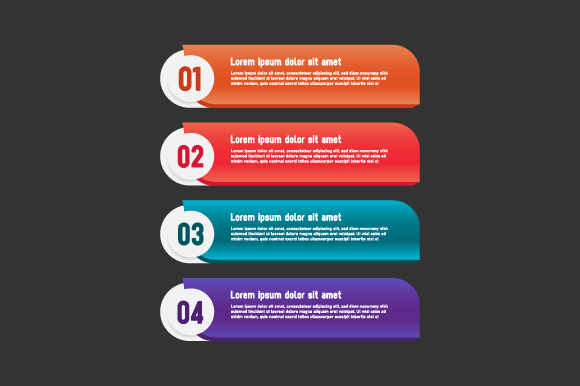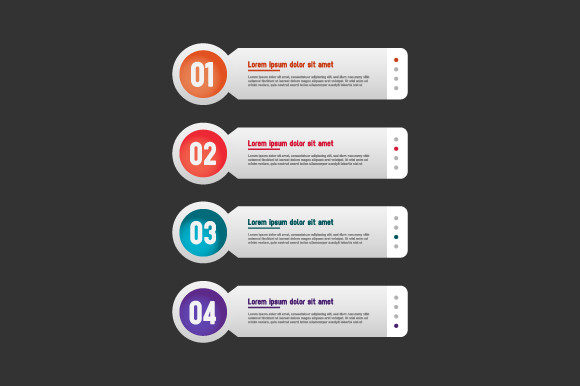
Evaluating Collection Element Banner Infographics for Professional Design Projects
When sourcing visual assets for digital marketing, corporate reporting, or web decoration, the distinction between a standalone graphic and a cohesive system is critical. A Collection Element Banner Infographic represents a specific category of design resource that prioritizes modularity and thematic consistency over singular, isolated visuals. Unlike a standard stock illustration or a one-off banner, these collections provide a unified library of decorative elements, data visualization components, and layout structures that share a common artistic language. For designers and content creators aged 20 to 50 who are managing long-term projects or multiple campaigns, understanding the functional value of this format is essential for efficient workflow and brand consistency.
The primary utility of a Collection Element Banner Infographic lies in its ability to solve the "visual fragmentation" problem. When teams source individual graphics from disparate creators, the result is often a disjointed user experience where line weights, color palettes, and stylistic choices clash. These collections mitigate that risk by offering pre-coordinated assets. However, they also introduce specific constraints regarding customization and file management. Evaluating whether this resource type fits your current project requires a balanced look at technical specifications, comparative advantages against alternatives, and practical application scenarios.
Technical Versatility Across Vector and Raster Formats
A defining characteristic of high-quality collection element banner infographic packages is the inclusion of multi-format deliverables. The standard provision of AI, EPS, SVG, JPG, and PNG files is not merely a convenience; it dictates the asset's lifespan and adaptability across different media channels. Understanding the specific role of each format helps in determining if the collection meets your technical infrastructure.
- AI (Adobe Illustrator) and EPS: These are the source files for professional modification. They allow for infinite scaling without pixelation and enable deep editing of anchor points, colors, and typography. If you anticipate needing to alter the fundamental structure of the infographic or extract specific elements for reuse in unrelated projects, these vector formats are non-negotiable. EPS serves as a universal vector exchange format compatible with CorelDRAW and Affinity Designer, while AI remains the industry standard for Adobe workflows.
- SVG (Scalable Vector Graphics): This format bridges the gap between design and development. For web-based infographics, SVGs offer crisp rendering on retina displays and small file sizes compared to raster equivalents. Crucially, SVG code can be manipulated via CSS and JavaScript, allowing for interactive hover states or animated data reveals that static images cannot achieve. If your collection element banner infographic is destined for a responsive website, native SVG support is a significant advantage over raster-only packs.
- JPG and PNG: While less flexible, these raster formats serve immediate deployment needs. PNGs with transparent backgrounds are vital for layering decorative elements over existing photography or colored backgrounds without manual masking. JPGs remain relevant for social media headers or email newsletters where file size limits are strict and transparency is unnecessary. A comprehensive collection provides these pre-rendered versions to save time for non-designers or rapid prototyping.
Comparing Collections Against Standalone Assets and Custom Design
Decision-makers often weigh three options: purchasing a Collection Element Banner Infographic, buying individual standalone graphics, or commissioning custom design work. Each approach carries distinct tradeoffs regarding cost, time, and creative control.
Collections vs. Individual Stock Assets
Individual stock assets offer maximum variety but minimum consistency. Sourcing five separate banners for a quarterly report might yield visually conflicting styles, requiring hours of post-production color grading and stroke adjustment to create harmony. A collection eliminates this friction. The tradeoff is reduced novelty; because the elements share a DNA, they may feel repetitive if overused across adjacent pages. However, for systematic design tasks like dashboard UI kits, annual reports, or educational course modules, the efficiency gain of a collection typically outweighs the desire for unique artistry in every single frame.
Collections vs. Custom Commissioned Work
Custom design offers bespoke alignment with brand guidelines and unique conceptual metaphors that no stock collection can match. However, the cost and timeline are exponentially higher. A Collection Element Banner Infographic serves as a strategic middle ground. It is particularly effective when the budget does not support full custom illustration but the quality bar exceeds generic free resources. Many professional designers now use these collections as a foundational base, applying custom textures, recoloring vectors, and combining elements to create semi-custom results at a fraction of the original production time. This hybrid approach maximizes ROI while maintaining a polished aesthetic.
Strengths and Limitations in Practical Application
To make an informed purchase or utilization decision, one must assess the realistic strengths and inherent limitations of these design systems. No resource is universally superior; fit depends entirely on context.
Key Strengths:
- Rapid Scalability: When a project scope expands unexpectedly—such as adding three new sections to a presentation or extending a landing page—a collection allows you to scale visuals instantly without returning to the drawing board.
- Style Guide Adherence: For agencies managing multiple clients or internal teams with junior designers, these collections act as guardrails. They prevent style drift by limiting choices to a pre-vetted set of harmonious elements.
- Decorative Utility: Beyond data, these collections often include abstract shapes, dividers, and background patterns. This dual-purpose nature (data + decoration) reduces the need to source supplementary texture packs.
Notable Limitations:
- Generic Metaphors: Collection infographics often rely on universal symbols (gears for process, lightbulbs for ideas, charts for growth). If your topic requires niche, industry-specific imagery (e.g., specialized medical equipment or proprietary manufacturing processes), a general collection will likely fall short regardless of its visual quality.
- Editing Complexity: Some collections are overly complex in their vector construction, featuring thousands of ungrouped paths or excessive gradients. Before committing, it is advisable to test a sample file. Poorly organized AI/EPS files can negate the time savings of using pre-made assets.
- Licensing Ambiguity: Always verify whether the license covers commercial end-products versus editorial use only. Some collections restrict usage in templates for resale or logo creation, which could be a dealbreaker for product designers.
Decision Framework: When to Choose This Resource Type
Selecting a Collection Element Banner Infographic is most justifiable under specific operational conditions. Use the following criteria to evaluate fit:
Choose this format if:
- You are building a multi-page document, slide deck, or website section requiring consistent visual rhythm.
- Your team lacks a dedicated illustrator but has competent layout designers who can assemble and modify vector components.
- The project timeline is compressed, and custom illustration cycles would jeopardize delivery.
- You need both functional data visualization and ambient decorative elements in a matching style.
- You require editable source files (AI/EPS/SVG) to adapt colors to specific brand hex codes.
Seek alternatives if:
- The project centers on a single, high-impact hero image where uniqueness is paramount.
- Your data structure is highly unconventional and does not map to standard chart types or diagram layouts included in the pack.
- You lack access to vector editing software and cannot utilize the AI/EPS/SVG files effectively.
- Brand guidelines prohibit the use of recognizable stock aesthetics, even when modified.
Maximizing Value Through Strategic Implementation
Acquiring the files is only the first step. Extracting maximum value from a Collection Element Banner Infographic requires intentional implementation strategies that extend beyond simple placement. Professionals should treat these collections as component libraries rather than finished artworks.
Start by deconstructing the master AI or EPS file. Separate recurring motifs, color swatches, and typographic treatments into a local asset library or CC Library. This transforms a static download into a dynamic design system. When working with the SVG files for web, optimize them using tools like SVGO to remove metadata and editor artifacts left by the original creator; this ensures faster load times and cleaner code integration.
Furthermore, consider the longevity of the aesthetic. Trends in infographic design shift cyclically. Flat design, isometric, hand-drawn, and glassmorphism styles all have different shelf lives. When evaluating a collection, assess whether its style aligns with your organization’s long-term visual strategy or if it is tied to a fleeting trend that will date your content within months. Timeless geometric abstraction often outperforms hyper-stylized character illustration for evergreen business content.
Ultimately, the decision to utilize a Collection Element Banner Infographic should be driven by workflow efficiency and systemic consistency rather than mere visual appeal. By carefully weighing the technical format offerings against your production capabilities, and comparing the modular benefits against the need for bespoke creativity, you can determine whether this resource class serves as a foundational asset or an unnecessary constraint. The goal is not to find the most beautiful graphic, but to secure the most effective visual solution for your specific communication challenges and operational realities.