Visualizing Impact: Using the Cyberbullying Outcomes Vector Template for Awareness and Education
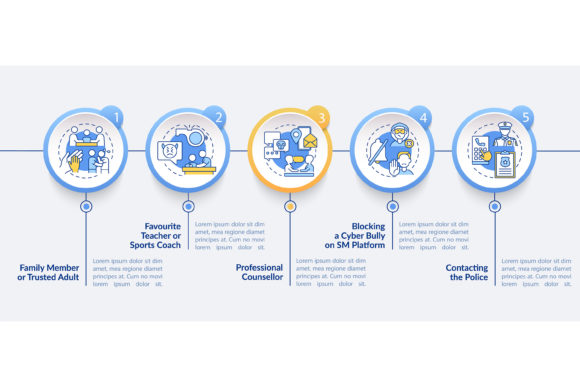
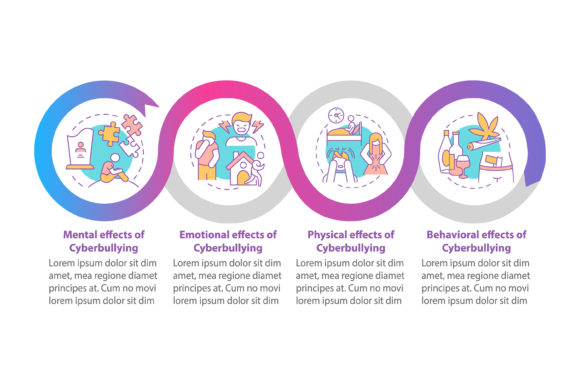
Addressing the aftermath of online harassment requires more than just statistics; it demands a narrative that resonates emotionally while remaining factually accurate. The Cyberbullying Outcomes Vector Template serves as a critical bridge between raw data and human empathy. Rather than presenting dry numbers, this design resource allows educators, counselors, and advocates to map the complex trajectory of digital abuse through structured visual storytelling. By utilizing a process timeline chart and workflow layouts with linear icons, professionals can illustrate the four distinct steps of cyberbullying impact without overwhelming their audience. This approach transforms abstract psychological concepts into tangible, understandable visuals that foster genuine connection and awareness.
Translating Emotional Data into Visual Narratives
The primary strength of a cyberbullying outcomes vector infographic template lies in its ability to organize chaos. When discussing mental health effects, the information can easily become dense or triggering. A well-designed vector template imposes a logical structure on this sensitive content. The included four-step data visualization is not merely an aesthetic choice; it is a pedagogical tool. It breaks down the experience into manageable phases: the initial incident, the immediate emotional reaction, the long-term psychological outcome, and the recovery or intervention stage.
For mental health professionals creating patient education materials, this linear progression helps normalize the victim's experience. Instead of feeling lost in a fog of anxiety or depression, individuals can see their feelings represented as part of a recognized process. The use of linear icons in the workflow layout reduces visual noise, allowing the viewer to focus on the message rather than distracting graphics. This minimalist approach is particularly effective when discussing heavy topics like isolation, self-harm ideation, or academic decline, as it provides a safe visual distance while maintaining clarity.
Applications in Educational and Corporate Training
Schools and universities are perhaps the most frequent users of these templates, but the application goes beyond standard anti-bullying assemblies. Guidance counselors often struggle to explain the long-term consequences of digital behavior to students who live entirely in the moment. Using a Cyberbullying Outcomes Vector Template allows counselors to create customized handouts or presentation slides that specifically address the platforms and behaviors relevant to their student body. Because the files are available in AI and EPS formats, school designers can adjust the color palette to match school branding or modify the text to reflect local resources and hotlines.
In the corporate sector, HR departments are increasingly recognizing cyberbullying as a workplace safety issue. Remote work and digital communication channels have created new vectors for harassment. Traditional workplace violence training often fails to address the nuances of Slack messages, email tone, or exclusion from digital meetings. An outcomes-focused infographic can be integrated into diversity and inclusion training to illustrate how digital microaggressions compound over time. The professional aesthetic of vector art ensures the material feels appropriate for a business environment, distinguishing it from juvenile educational content while still conveying the severity of the mental health impacts.
Supporting Non-Profit Advocacy and Fundraising
Non-profit organizations dedicated to digital safety face the constant challenge of capturing attention in a saturated media landscape. Donors and policymakers respond to stories, but they validate those stories with data. The cyberbullying outcomes vector infographic template offers a versatile solution for annual reports and grant proposals. By visualizing the correlation between online harassment and specific mental health outcomes, organizations can make a compelling case for funding. The ability to export these designs as high-resolution JPG or PNG files means they can be seamlessly dropped into social media campaigns, email newsletters, and printed brochures without losing quality.
Furthermore, advocacy groups often need to adapt their messaging for different cultural or linguistic contexts. Vector files (SVG, AI, EPS) are inherently scalable and editable, making localization efficient. A campaign targeting parents might focus on the "warning signs" step of the timeline, while a campaign targeting legislators might emphasize the "long-term societal cost" step. Having a master template that maintains visual consistency across these variations strengthens brand recognition and trust, which are essential for organizations working in crisis intervention.
Technical Versatility Across Formats and Platforms
The practical utility of this template is heavily dependent on file format flexibility. Designers and non-designers alike benefit from having access to multiple file types. The SVG format is indispensable for web-based resources, ensuring that infographics remain crisp on mobile devices where much of the target audience consumes content. For print materials like workshop workbooks or conference banners, the EPS and AI files provide the necessary resolution and layer access for professional printing.
Even users without advanced design software can leverage the JPG and PNG versions. These raster formats serve as ready-to-use assets for quick presentations or internal memos. However, the true value emerges when users take advantage of the editable source files. Being able to swap out generic icons for culturally specific imagery, or updating statistics as new research emerges, extends the lifespan of the template significantly. This adaptability prevents the resource from becoming outdated, ensuring that the presentation design elements always reflect current understanding of cyberbullying dynamics.
Navigating Sensitivity and Ethical Design Choices
While the Cyberbullying Outcomes Vector Template is a powerful tool, it requires thoughtful application. Visualizing trauma carries ethical responsibilities. Users must consider whether the chosen icons and metaphors accurately represent the lived experience without resorting to stereotypes or graphic depictions of self-harm. The template’s linear icon style is generally safer than illustrative realism, as it avoids triggering specific traumatic memories associated with photographic imagery. However, the accompanying text and color psychology must also be vetted.
Another consideration is accessibility. High-contrast colors and alt-text descriptions are mandatory when using these templates digitally. The four-step process should be readable by screen readers, ensuring that visually impaired audiences receive the same educational value. Additionally, users should evaluate whether the linear timeline implies a simplistic cause-and-effect relationship that might inadvertently blame victims for not following a "correct" recovery path. Adding nuance through supplementary text or branching workflow options can help mitigate this risk, acknowledging that healing is rarely a straight line.
Customizing for Specific Audiences and Industries
Different stakeholders require different entry points into the conversation about cyberbullying outcomes. Parents may need a version of the template that focuses on behavioral changes at home, using warmer colors and softer iconography to reduce defensiveness. Conversely, law enforcement or legal professionals might require a stark, evidence-based variation that highlights the escalation from harassment to criminal activity. The template’s modular nature supports this segmentation.
Healthcare providers can also adapt the workflow layout to fit clinical intake processes. By mapping patient-reported symptoms against the standardized outcomes vector, clinicians can identify patterns that might otherwise be missed in verbal interviews. This clinical application demonstrates that the template is not just a communication device but potentially a diagnostic aid. Ultimately, the goal is to move beyond awareness toward actionable understanding. Whether used in a classroom, a boardroom, or a therapy office, the Cyberbullying Outcomes Vector Template provides the structural foundation necessary to turn difficult conversations into opportunities for support and change.