Enhancing Awareness and Education with an Addiction Types Vector Infographic
Communicating complex health topics requires a delicate balance of accuracy, empathy, and visual clarity. When addressing substance use disorders and behavioral dependencies, text-heavy documents often fail to engage audiences or convey critical information quickly. An Addiction Types Vector Infographic serves as a vital bridge between clinical data and public understanding. This design resource transforms abstract medical concepts into accessible visual narratives, allowing educators, healthcare providers, and advocates to present sensitive information in a structured, non-judgmental format. By leveraging scalable vector graphics, professionals can create materials that are not only informative but also adaptable across various media platforms, from digital presentations to printed brochures.
Understanding the Core Design Elements
To effectively utilize these resources, it is essential to understand what distinguishes a high-quality Addiction types vector infographic template from generic stock art. These templates are specifically engineered for health communication. They typically feature clean line icons that represent various substances and behaviors without resorting to stigmatizing imagery. The aesthetic is usually professional and calming, utilizing color psychology to maintain viewer engagement without causing distress.
The technical versatility of these files is a primary advantage for designers and communicators. Available in multiple formats including JPG, EPS, PNG, SVG, and AI, these assets support diverse workflows:
- AI and EPS Files: Essential for print materials like posters, clinic handouts, and large-format banners. These vector formats allow for infinite scaling without pixelation, ensuring crisp lines whether the graphic is two inches or twenty feet wide.
- SVG Files: Ideal for web-based education portals and responsive websites. SVGs maintain quality on high-resolution screens and can be animated via CSS for interactive learning modules.
- PNG and JPG Files: Perfect for quick integration into slide decks, social media posts, and internal memos where editing capabilities are not required.
Addressing Communication Challenges in Addiction Education
Professionals working in addiction recovery and prevention face specific hurdles when presenting information. The subject matter is dense, emotionally charged, and frequently misunderstood. A common challenge is the "wall of text" effect, where audiences disengage because the cognitive load is too high. Furthermore, outdated or sensationalist imagery can inadvertently reinforce stigma, making it harder for individuals to seek help.
An Addiction Types Vector Infographic addresses these pain points by prioritizing cognitive ease. Visual processing is significantly faster than textual processing. When a viewer sees a categorized layout with distinct icons for opioids, alcohol, stimulants, and behavioral addictions like gambling, they can instantly grasp the scope of the issue. This immediate recognition reduces anxiety and creates a safe entry point for deeper conversation. For counselors and therapists, these visuals act as neutral third-party tools, allowing clients to point to an icon rather than verbally articulating a painful struggle during early sessions.
Structuring Information: Data Visualization and Timelines
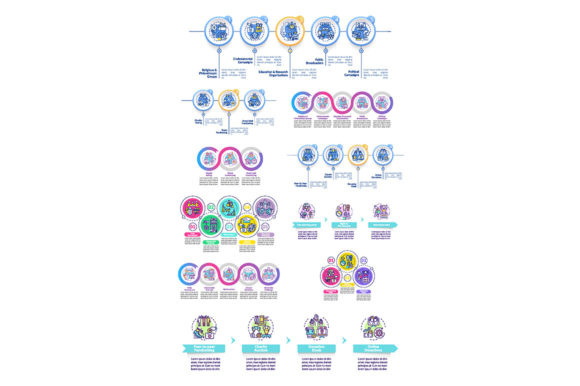
Effective health communication relies on structure. Many premium templates include built-in frameworks for data visualization with 3 steps. This tripartite model is particularly effective for explaining the cycle of addiction or the stages of treatment. For example, a three-step visualization might illustrate:
- Recognition: Identifying triggers and patterns through visual cues.
- Intervention: Highlighting therapeutic approaches and support systems.
- Recovery: Showcasing milestones and long-term maintenance strategies.
Beyond cyclical processes, the process timeline info chart is another critical component found in these templates. Recovery is rarely linear, yet timelines help set realistic expectations for patients and families. A well-designed timeline can map out the physiological and psychological benchmarks of withdrawal, stabilization, and rehabilitation. When this data is presented visually, it demystifies the journey ahead. Families often feel overwhelmed by uncertainty; a clear timeline provides a roadmap that fosters patience and hope. For grant writers and program directors, these timelines also serve as powerful evidence of structured programming when presenting to stakeholders.
Practical Applications Across Different Sectors
The utility of an Addiction Types Vector Infographic extends far beyond clinical settings. Different user groups leverage these assets to achieve distinct outcomes based on their specific operational needs.
Educational Institutions and Training Programs
Schools and universities use these infographics for preventive education. In this context, the goal is awareness rather than treatment. Educators utilize the workflow layout with line icons to explain risk factors and protective factors in a way that resonates with younger demographics. The modern, flat-design aesthetic avoids the "scared straight" approach of previous decades, fostering open dialogue instead of fear. Training programs for nursing and social work students also rely on these vectors to teach diagnostic criteria and pharmacological classifications efficiently.
Healthcare Marketing and Public Health Campaigns
Public health organizations require assets that are shareable and impactful. When launching a campaign about the dangers of fentanyl or the rise of vaping, agencies need visuals that stop the scroll. Customizable vector templates allow marketing teams to update statistics and messaging rapidly without commissioning new illustrations from scratch. The ability to export high-resolution PNGs ensures that branding remains consistent across billboards, bus wraps, and Instagram stories.
Corporate Wellness and HR Departments
Employee Assistance Programs (EAPs) increasingly focus on mental health and substance use. HR professionals use these infographics in internal newsletters and wellness workshops to destigmatize seeking help. Because corporate environments demand professionalism, the clean line art and neutral color palettes of vector templates are preferable to photographic depictions of drug use, which can be inappropriate for workplace settings.
Implementation Best Practices and Considerations
While having access to an Addiction types vector infographic template is valuable, successful implementation requires thoughtful customization. Users should approach these templates as starting points rather than final products. Accuracy is paramount; always verify that the icons and categorizations align with current DSM-5 or ICD-11 standards. Medical terminology evolves, and using outdated terms can undermine credibility.
Cultural competence is another vital consideration. Icons and symbols carry different meanings across cultures. When adapting a template for a specific community, review the visual metaphors to ensure they are culturally appropriate and respectful. Color choices should also be evaluated; while red often signifies danger in Western contexts, it may imply prosperity or luck elsewhere. Customizing the palette to suit the target audience enhances receptivity.
Accessibility must remain a priority throughout the design process. Ensure that all vector graphics include descriptive alt-text when published digitally. For print materials, maintain high contrast ratios between icons and background colors to assist viewers with visual impairments. Avoid relying solely on color to convey meaning; use patterns or labels as secondary identifiers. These small adjustments ensure that your educational materials reach the widest possible audience, fulfilling the core mission of health communication.
Optimizing Workflow for Maximum Impact
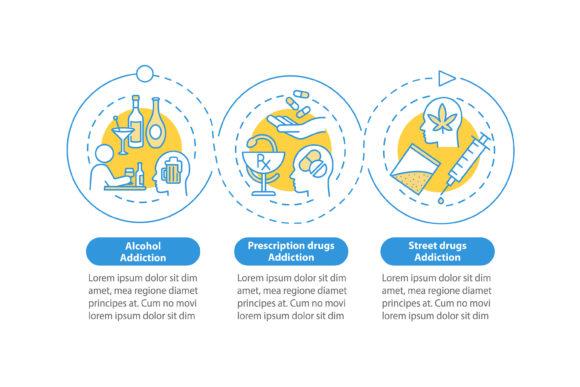
For designers and content creators, integrating these assets into a production workflow saves significant time. The Drugs addiction presentation outline design elements included in comprehensive template packs provide a cohesive visual language. Instead of mixing disparate illustration styles, users can build entire slide decks or multi-page reports with a unified look. This consistency reinforces brand identity and aids memory retention for the audience.
When selecting a template, prioritize those that offer organized layer structures in AI or EPS formats. Well-organized files separate icons, text, backgrounds, and charts into distinct layers. This organization allows for rapid iteration. If a client requests a change from "Alcohol" to "Prescription Medication," a designer can swap the icon and update the label in seconds without rebuilding the entire composition. This efficiency is crucial in fast-paced public health environments where information needs to be disseminated immediately in response to emerging crises.
Ultimately, the value of an Addiction Types Vector Infographic lies in its ability to humanize data. Behind every statistic and every icon is a person navigating a difficult path. By choosing professional, empathetic, and clear visual tools, communicators honor that reality. Whether used for a classroom lecture, a therapy session, or a national awareness campaign, these vector resources empower professionals to deliver messages that educate, reduce stigma, and inspire positive change. Investing in high-quality, editable templates is not merely a design choice; it is a strategic decision to improve health literacy and support recovery efforts through superior visual communication.