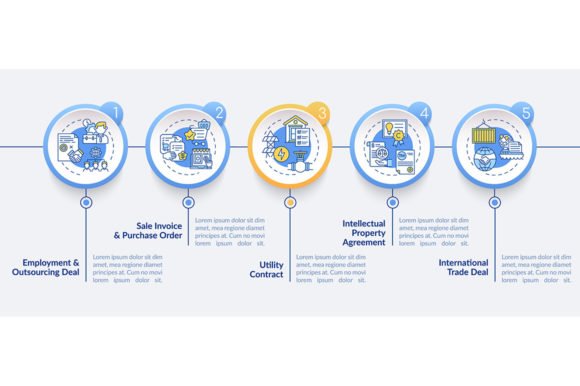
Common Commercial Contracts Types: Visualizing Agreements for Better Deal Management
Navigating the landscape of business agreements requires more than just legal literacy; it demands clear communication and structured visualization. Understanding Common Commercial Contracts Types is foundational for procurement teams, sales directors, and operations managers who must align stakeholders on complex terms. However, simply knowing the definitions is often insufficient when presenting outsourcing deals or partnership frameworks to non-legal audiences. This is where integrating specific contract knowledge with professional presentation design elements becomes a strategic advantage. By combining substantive contract expertise with visual tools like process timeline charts and workflow layouts, professionals can transform dense legal text into actionable business intelligence.
Distinguishing Core Commercial Contract Categories
To effectively visualize agreements, one must first distinguish between the primary categories of commercial contracts. Each type serves a distinct operational purpose and carries unique risk profiles that influence how they should be presented in an outsourcing deal presentation.
- Service Level Agreements (SLAs): These are performance-centric contracts common in IT outsourcing and facility management. Unlike standard purchase orders, SLAs focus on metrics, uptime, and penalties. Visualizing these requires data-heavy infographics rather than simple timelines.
- Master Services Agreements (MSAs): MSAs establish the overarching terms for a long-term relationship, under which individual Statements of Work (SOWs) are issued. They are framework documents. When comparing MSAs to standalone contracts, the key tradeoff is initial negotiation complexity versus long-term agility.
- Non-Disclosure Agreements (NDAs): Often the precursor to deeper negotiations, NDAs protect intellectual property. While legally simpler, they are critical gatekeepers in the deal flow process.
- Licensing and Distribution Agreements: These govern the right to use or sell products. They differ significantly from service contracts because they involve royalty structures and territory rights rather than hourly deliverables.
- Employment and Independent Contractor Agreements: Distinguishing between W-2 employees and 1099 contractors is vital for compliance. Misclassification risks make this category particularly sensitive during organizational restructuring.
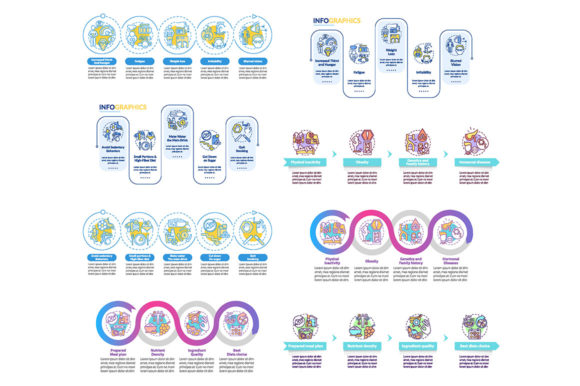
When evaluating resources for managing these agreements, professionals often compare static document repositories against dynamic visual templates. A static repository stores the signed PDF, but a visual template—such as a Common commercial contracts types vector infographic template—actively educates stakeholders on the relationships and hierarchies between these documents.
Visual Frameworks vs. Traditional Documentation
A frequent decision point for business analysts and project managers is whether to rely solely on traditional text-based documentation or to invest in visual assets. Both approaches have strengths and limitations depending on the audience and the stage of the deal.
Traditional legal drafting is precise and enforceable. It is the necessary bedrock of any commercial relationship. However, its density creates friction during internal reviews and executive briefings. Stakeholders may skim over critical clauses regarding liability caps or termination windows simply because the information is buried in paragraph form. In contrast, visual frameworks prioritize comprehension and alignment over legal enforceability. They serve as translation layers.
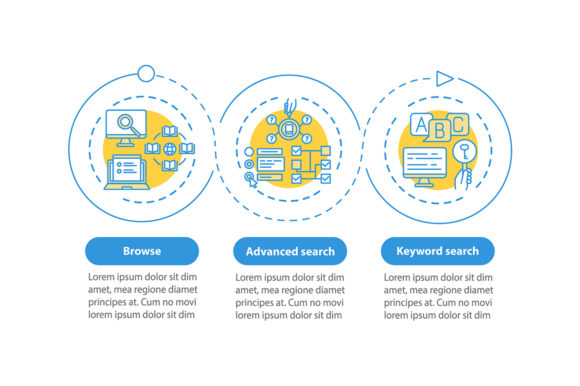
For example, using a workflow layout with linear icons allows a presenter to map out the approval hierarchy of a Master Services Agreement without reciting clause numbers. This approach is superior for onboarding new vendors or explaining compliance requirements to operational staff. However, visuals cannot replace the contract itself. The most effective strategy uses visuals as a companion to, not a substitute for, the binding legal text. When comparing options, consider that text ensures validity, while visuals ensure utility.
Evaluating Vector Infographic Templates for Outsourcing Deals
In the context of outsourcing deal presentations, generic slide decks often fail to capture the nuance of vendor relationships. Specialized vector templates offer distinct advantages over custom-built graphics created from scratch. The primary benefit is scalability and editability. Vector formats allow designers to resize elements for everything from mobile briefings to large-format boardroom displays without pixelation.
Furthermore, pre-structured templates based on Common Commercial Contracts Types provide a cognitive scaffold. Instead of spending hours determining how to visually represent a "termination for convenience" clause, users can leverage established iconography and layout conventions. This reduces preparation time and ensures consistency across multiple presentations. The tradeoff is a potential lack of bespoke customization compared to hiring a dedicated agency, but for most internal and B2B communications, the efficiency gain outweighs the need for artistic uniqueness.
Data Visualization: The 5-Step Process Timeline
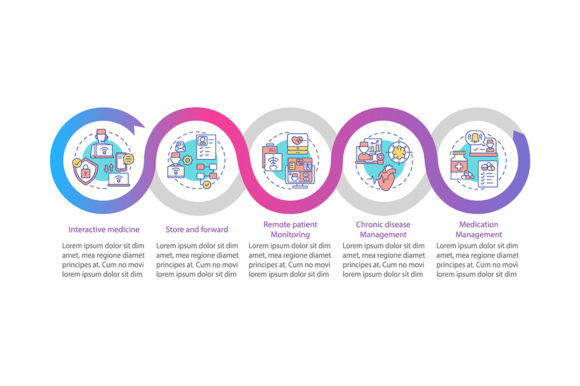
Commercial contracts are rarely static; they are lifecycle events. Effectively communicating this lifecycle is essential for managing expectations. A data visualization with 5 steps is frequently the optimal format for illustrating contract maturation because it balances detail with digestibility. Fewer steps oversimplify the process, while more steps overwhelm the viewer.
- Requirement Definition & Sourcing: The initial phase where business needs are translated into technical specifications. Visuals here should emphasize stakeholder alignment and market analysis.
- Negotiation & Drafting: The iterative exchange of redlines. A process timeline chart in this stage helps track version control and approval bottlenecks.
- Execution & Onboarding: The signing and implementation phase. This is where SLAs become active and KPIs begin tracking.
- Performance Management & Governance: Ongoing monitoring. Data visualization is most critical here, converting raw performance data into trend lines and compliance scorecards.
- Renewal, Renegotiation, or Termination: The end-of-life decision point. Visual aids help compare current performance against original benchmarks to inform the go/no-go decision.
This five-step model applies broadly across Common Commercial Contracts Types, though the duration and intensity of each step vary. For instance, a software licensing deal may spend disproportionate time in Step 2 (Negotiation), whereas a facilities management contract may require heavy emphasis on Step 4 (Governance). Adapting the visual weight of each step in your presentation helps signal where the true value and risk lie in a specific agreement.
Technical Specifications and Asset Versatility
When selecting design resources for commercial contract visualization, file format compatibility is a practical constraint that impacts workflow efficiency. Professional environments require assets that integrate seamlessly with diverse software ecosystems. A comprehensive resource package typically includes EPS, JPG, PNG, SVG, and AI files, each serving a specific function.
- AI (Adobe Illustrator) & EPS: These are source files essential for deep editing. If you need to change the color palette to match corporate branding or alter the geometry of a workflow icon, these vector-native formats are mandatory. They preserve layer integrity and typographic editability.
- SVG (Scalable Vector Graphics): Increasingly important for digital-first presentations. SVGs render perfectly in web browsers and modern presentation tools like PowerPoint and Keynote. They maintain crispness at any zoom level and often support CSS animation, allowing for interactive contract dashboards.
- PNG & JPG: Raster formats best suited for quick insertion into documents, emails, or legacy systems that do not support vectors. PNGs support transparency, making them ideal for overlaying workflow diagrams onto colored backgrounds, while JPGs are optimized for photographic content or smaller file sizes.
The availability of these formats within a single ZIP archive eliminates the friction of format conversion. For teams comparing free online icons against premium curated packs, the inclusion of editable source files is usually the deciding factor. Free resources often lack the layered organization required for professional modification, leading to wasted hours reconstructing basic shapes.
Decision Factors: When to Use Visual Contract Tools
Not every contractual situation warrants a sophisticated visual treatment. Determining when to deploy a process timeline chart or a detailed infographic template requires assessing the complexity of the message and the familiarity of the audience.
Visual tools are highly recommended when:
- Cross-functional alignment is needed: Legal, finance, and operations teams speak different languages. Visuals act as a pidgin dialect that bridges these gaps.
- Onboarding new vendors or employees: Reducing the cognitive load of reading 50-page MSAs improves retention of key obligations.
- Presenting to C-suite executives: Senior leaders typically require synthesized insights rather than granular details. A 5-step data visualization conveys status faster than a written report.
- Managing complex outsourcing transitions: When transferring services from one provider to another, visual workflows prevent gaps in coverage.
Conversely, relying heavily on visuals may be counterproductive during:
- Active litigation or dispute resolution: Ambiguity in visuals can be weaponized. Stick to precise textual citations.
- Simple transactional purchases: Creating an infographic for a standard office supply PO is an inefficient use of resources.
- Regulatory filings: Government bodies typically mandate specific textual formats. Visuals may be accepted as supplementary exhibits but never as primary submissions.
Balancing Aesthetics with Substantive Accuracy
The ultimate goal of utilizing Common commercial contracts types vector infographic templates is to enhance understanding, not merely to decorate a slide deck. There is an inherent tension between aesthetic simplicity and legal accuracy. Over-simplification can mislead stakeholders about their actual rights and obligations. Therefore, every visual element should be validated against the underlying contract text.
Best practice involves treating the visual asset as a living document that evolves alongside the contract. If the MSA is amended to include a new data privacy addendum, the corresponding workflow layout must be updated to reflect that additional compliance checkpoint. This synchronization ensures that the presentation design elements remain reliable reference points rather than outdated artifacts.
Professionals evaluating these resources should look for templates that prioritize clarity over decoration. Linear icons and clean typography generally perform better in corporate settings than ornate illustrations. The focus should remain on the logical flow of the commercial relationship. By thoughtfully integrating these visual tools with a robust understanding of contract types, organizations can improve deal velocity, reduce misunderstandings, and foster stronger, more transparent commercial partnerships.