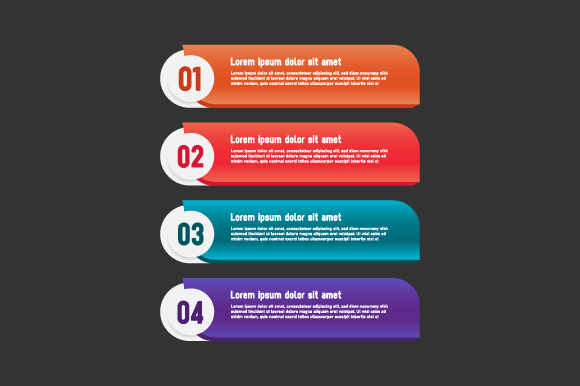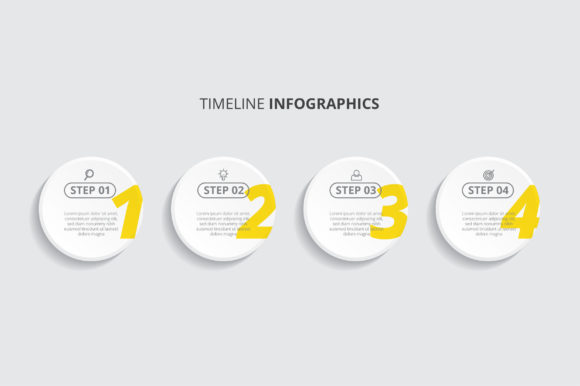
Modern Business Infographic: Transforming Complex Data into Visual Strategy
In the fast-paced environment of contemporary commerce, attention is a scarce currency. A Modern Business Infographic serves as more than just a decorative element for a slide deck; it acts as a cognitive bridge between raw data and actionable insight. When professionals utilize high-quality resources like a fully editable vector package containing ZIP, EPS, and JPG formats, they are not merely downloading an image. They are acquiring a flexible communication framework designed to translate dense corporate narratives into digestible visual stories. The true value lies in how these 100% editable assets adapt to specific organizational needs, turning abstract metrics into compelling arguments for stakeholders who may not have the time or inclination to parse through spreadsheets.
Bridging the Gap Between Departments with Visual Clarity
One of the most immediate applications for a modern business infographic template is internal alignment. Cross-functional teams often struggle because marketing speaks in impressions, finance speaks in margins, and operations speaks in throughput. A standardized visual template creates a common language. For instance, when presenting quarterly performance reviews, using a cohesive infographic layout ensures that every department head interprets the data hierarchy in the same way. The availability of EPS files is particularly crucial here. Unlike static images, vectors allow a project manager to adjust color codes to match specific departmental branding while maintaining the overall corporate identity. This subtle customization fosters ownership without sacrificing consistency, making the data feel relevant to each specific audience segment within the organization.
Elevating Client Proposals and Pitch Decks
Sales teams and agency partners face the constant challenge of differentiating their offerings in saturated markets. Text-heavy proposals often get skimmed or ignored. Integrating a professionally designed infographic can serve as an anchor point in a pitch deck, guiding the prospect’s eye toward key value propositions. Because these resources come as high-quality vectors, sales enablement teams can rapidly customize charts to reflect a prospective client's specific industry benchmarks rather than generic placeholders. This level of personalization signals effort and expertise. When a potential partner sees their own logo integrated seamlessly into a sophisticated process diagram or market analysis chart, the perceived value of the proposal increases significantly. The JPG versions are also invaluable for quick email follow-ups or LinkedIn messaging, where embedding a lightweight, visually striking summary can improve open and engagement rates compared to text-only outreach.
Strategic Considerations for Vector-Based Assets
While the aesthetic appeal of a Modern Business Infographic is important, the technical specifications dictate its long-term utility. Understanding the distinction between file types in your download package is essential for workflow efficiency. The EPS (Encapsulated PostScript) format is the industry standard for print and large-format display. If you plan to use the infographic at a trade show booth, on office wall decals, or in high-resolution annual reports, the vector nature of the EPS file ensures zero pixelation regardless of scale. Conversely, the JPG format included in the ZIP archive is optimized for digital consumption. It provides a ready-to-use asset for social media, blog posts, or internal newsletters where file size and compatibility matter more than infinite scalability.
The "100 Vector Fully Editable" claim requires verification against your available software stack. True editability means you can manipulate individual nodes, change typography, and recolor elements without flattening the image. Before committing to a specific design system, ensure your team has access to Adobe Illustrator or compatible vector editing software. Relying solely on rasterized previews limits the ROI of the asset. Furthermore, consider the licensing terms associated with the download. For businesses operating across multiple subsidiaries or creating content for third-party clients, confirming that the license covers commercial redistribution and modification is a non-negotiable step in risk management.
Navigating Industry-Specific Applications
Different sectors leverage modern infographics for distinct strategic purposes. In the fintech space, trust is paramount. Infographics here tend to favor clean lines, conservative color palettes, and precise iconography to convey security and stability. A complex regulatory compliance flowchart, when rendered as a sleek modern graphic, reduces anxiety and enhances comprehension for both employees and customers. In contrast, creative industries and tech startups often utilize bolder gradients, isometric illustrations, and dynamic layouts to signal innovation. A SaaS company might use an infographic to visualize user journey maps or API integration architectures, transforming technical documentation into a marketing asset that demonstrates ease of use.
Healthcare and education sectors benefit immensely from the simplification capabilities of these templates. Patient education materials or training modules often fail due to jargon overload. By adapting a business infographic template, administrators can restructure medical protocols or learning outcomes into sequential, visual steps. The ability to edit text and icons allows subject matter experts to tailor generic templates to highly specialized content without needing to hire a designer from scratch. This democratization of design empowers frontline workers to create professional-grade educational resources on demand, reducing bottlenecks in communication pipelines.
Balancing Aesthetics with Information Integrity
A common pitfall when utilizing pre-made Modern Business Infographic downloads is prioritizing style over substance. A beautiful chart that misrepresents data is worse than no chart at all. When customizing these 100% editable vectors, maintain rigorous data integrity. Avoid distorting axis scales to make trends look more dramatic, and ensure that icon choices accurately metaphorize the underlying concept. For example, using a "growth" arrow icon for a metric that actually represents retention can confuse viewers. The flexibility of the EPS file should be used to enhance clarity, not to embellish weak data points.
Accessibility is another critical consideration often overlooked in modern design trends. High-contrast colors and legible typography are not just best practices; they are requirements for inclusive communication. When editing vector files, verify that color combinations meet WCAG standards, especially if the infographic will be published on public-facing websites or government portals. Alt-text descriptions for JPG uploads should comprehensively describe the information conveyed in the image, ensuring that screen reader users receive the same insights as sighted viewers. Treating accessibility as a core component of the design process, rather than an afterthought, expands the reach and effectiveness of your visual communications.
Maximizing Workflow Efficiency with Downloadable Packs
The inclusion of a ZIP archive containing multiple formats suggests a resource designed for versatile deployment. Smart organizations treat these packs as modular design systems rather than single-use templates. By establishing a library of approved, edited master files, teams can reduce turnaround times for future projects. Instead of starting from a blank canvas for every monthly report, designers and marketers can pull from a repository of pre-styled charts, timelines, and comparison matrices that already align with brand guidelines. This systematic approach to visual content creation compounds efficiency over time.
Ultimately, the decision to integrate a Modern Business Infographic into your operational toolkit should be driven by communication goals rather than design trends. Whether you are explaining a merger to employees, pitching investors on market expansion, or educating customers on product features, the right visual asset accelerates understanding. The combination of high-quality vector editability and multi-format availability provides the technical foundation necessary for this acceleration. However, it is the thoughtful application—grounded in audience empathy, data accuracy, and strategic intent—that transforms a downloadable file into a genuine business advantage. By focusing on how these tools solve real-world friction points in information exchange, professionals can unlock the full potential of visual storytelling in the modern enterprise landscape.